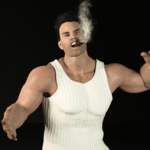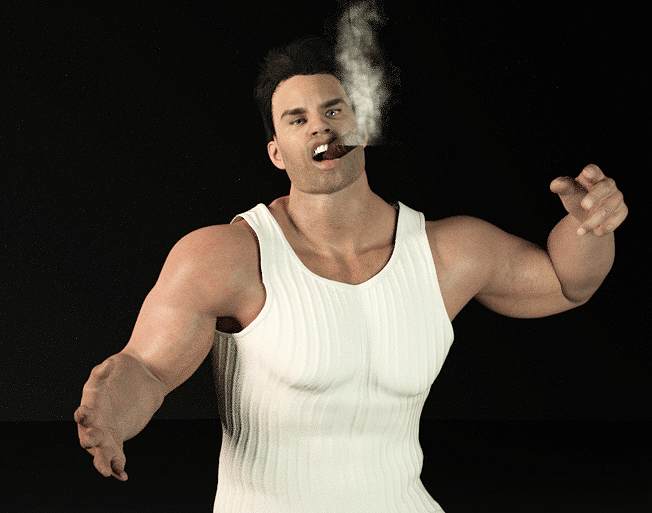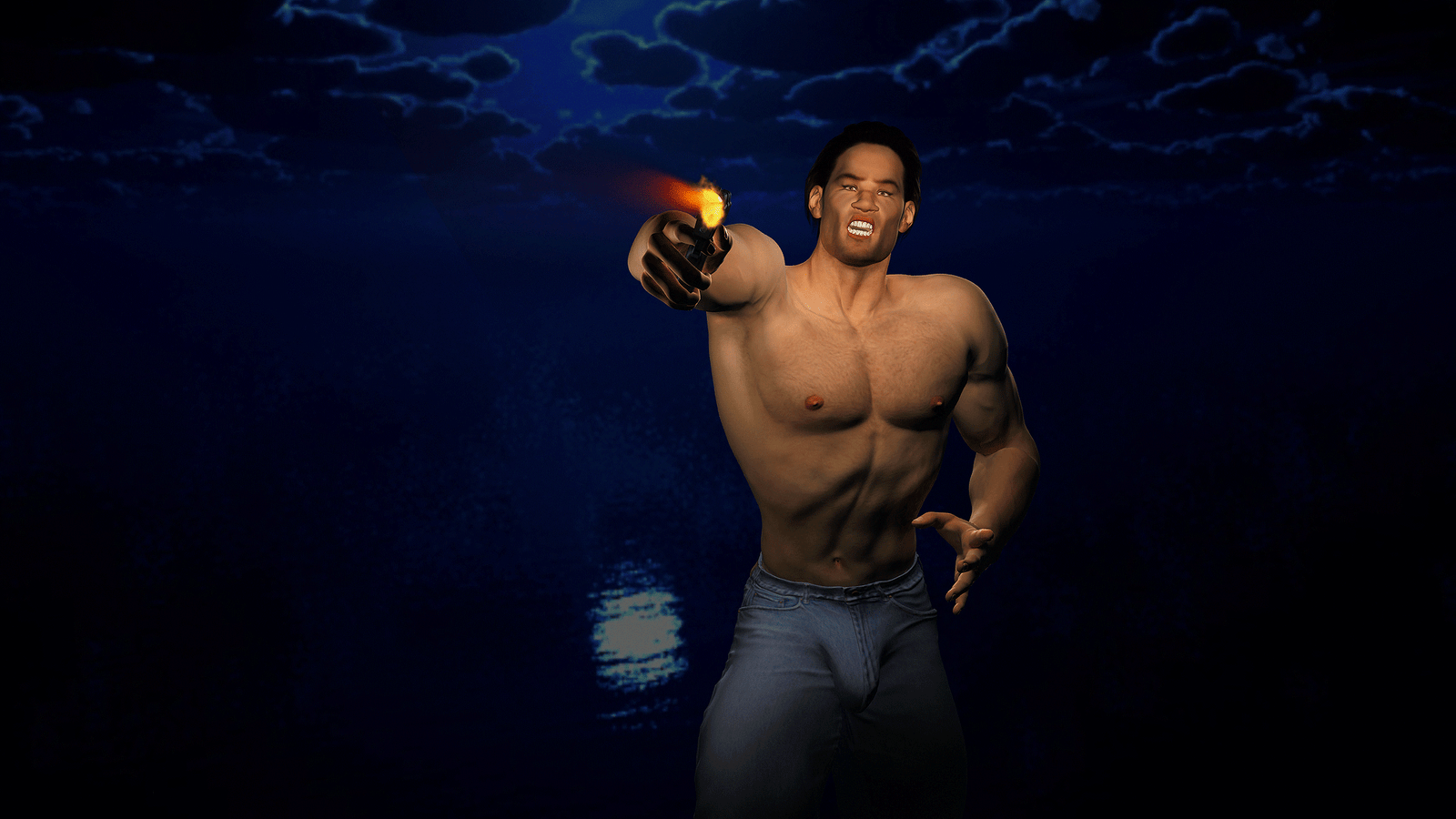
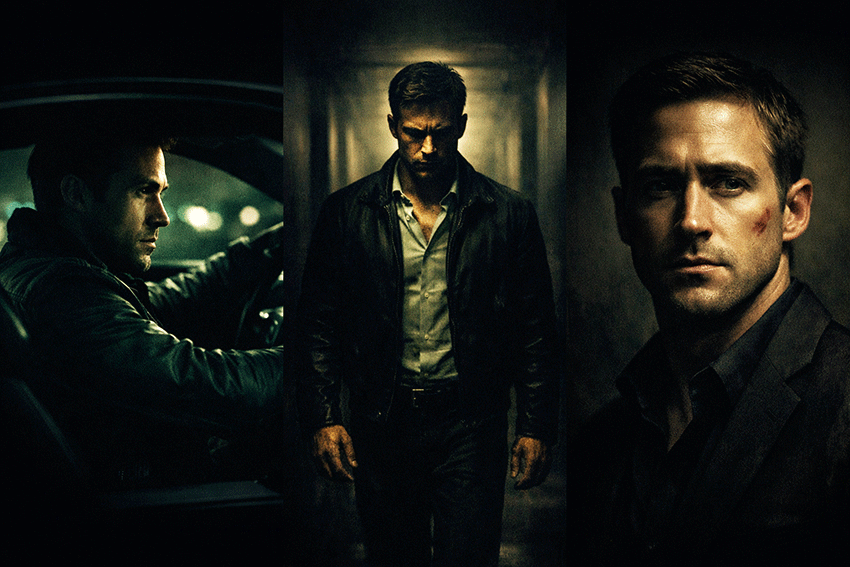
Look closely at this three-panel AI-created image and you may believe you are looking at the likeness of Ryan Gosling. This is not the likeness of Ryan Gosling, but the similarity happens because AI-created art draws from a very large database which provides source material derived from whenever anybody uses an AI app to generate an image.
The creation of art is not limited only to those of us who breathe oxygen. We human beings have competition nowadays because art that is produced by AI is very easy to be found, especially online.
A useful definition of AI-created art is this: Content in which algorithms or other machine (computer) decisions were used that lead to the production of output which has certain artistic traits.
Comfort
We tend to feel comforted nowadays in the belief that AI-created art is never self-originating. We’ve been taught to believe that AI-created art always requires a person who can enter text or spoken-word directions that are essential to guide decision-making and choices regarding how the art turns out.This is at the heart of the comparison of AI-created art with human-created art: Is human involvement forever going to be required to guide non-human (computerized) generation of art? Or, will the day come when AI-created art becomes self-generated? I believe the day will arrive when AI creates and releases art without any human participation.
Human-created art means content with certain artistic traits exists because some human being made particular decisions and choices to express themselves artistically. Human artists tend to create art that represents how they see and hear things in the real world or imagine things in worlds they conceive of in their minds. Consider as proof the question as to why a musical artist would choose to create a song that switches time signatures repeatedly throughout. The correct answer is that’s how the musical artist hears in their mind what a song should do and then makes that happen in the physical world.
Toes
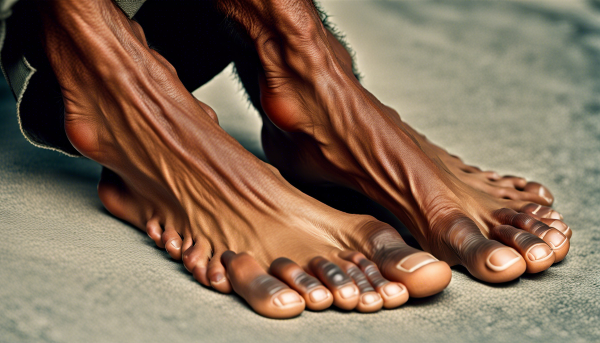
Do you believe any human would deliberately create an art image showing a man’s feet with too many toes? Perhaps to support the horror genre? AI produced this image and the algorithm pulled source data from somewhere and the outcome is too many toes on a man’s feet. I find that image extremely creepy and unappealing to me. Much of the AI-created imagery that I see online looks odd to me (compared to human-created art) and I usually am not attracted to such machine-created works at all. However, I continue to believe that AI will ultimately create and release art without any human participation required. It seems likely that at that point AI will not consider whether humans count toes on a AI-created character or whether humans respond favorably to songs that readily switch from four/four time to three/four time and back again.The essential difference here for the purposes of this discussion is that human beings are capable of having and expressing authentic and genuine emotions as well as recognizable human visual perceptions or judgments while machines and mathematical (computerized) processes are not similarly capable. AI-created art can readily be produced nowadays which represents attempts using technology to emulate a human artist’s intentions, emotions, choices and visual/auditory perceptions. I believe the day will come when AI successfully can emulate human artists’ intentions, emotions, choices and visual/auditory perceptions with such accuracy that many people will readily believe that AI has achieved sentience that matches that of human beings.
Choices
What can or should humans do in response? Some human artists today choose to use AI within their processes of creating and producing art. That seems to me to be the wisest and most adaptive choice. Other artists refuse to use any AI. I see that choice as being pointless. The development of increasingly more accurate AI emulating human artists’ intentions, emotions, choices and visual/auditory perceptions seems to me to be inevitable.There are fundamental differences between expressed emotions and perceptions presented by human beings through their artistic creations versus expressed synthetic emotions or visual/auditory perceptions which are standard when AI apps attempt to produce artist output. Those fundamental differences can be especially difficult to recognize by viewers/listeners who have specifically not been trained to identify particular image/audio production processes and techniques.
Few people stop to think about the fact that the “A” in AI stands for artificial which has come to signify something that is fake. In fact, “deep fake” content (images and audio) is so widely produced nowadays using AI. The very reason why AI “deep fake” content exists in the first place is because most people have not been trained to recognize and identify that which is genuine versus that which is artificial, synthetic, or fake. This leads to easy and thorough manipulation of peoples’ minds and perceptions—an essential strategic first step towards full control over humanity by synthetic intelligence. So, now might be a good time for you to stop and answer one question: In which group (trained or untrained) do you consider yourself to be?